
Tech News Ham Radio
LARC BIT-40 (40-Meter Analogue SMD Kit
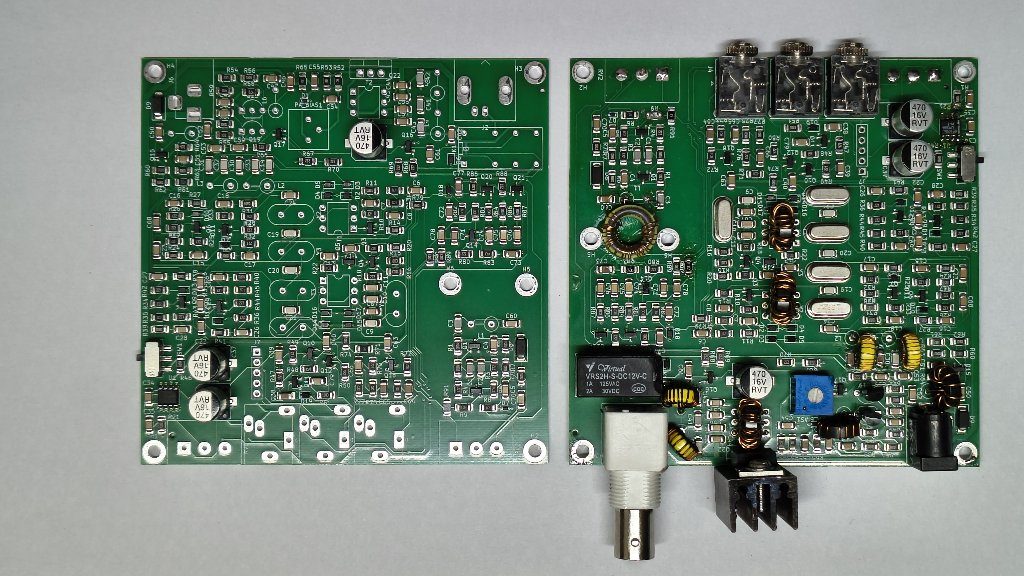
Dec
Technical Review & Design Analysis: LARC BIT-40 (40-Meter Analogue SMD Kit)
The LARC BIT-40, recently launched by HF Signals, is a single-band 40-meter, fully analogue, SMD-based transceiver kit aimed at builders who still enjoy understanding RF at the circuit level. At a time when most radios rely heavily on DSP, menus, and software layers, the BIT-40 deliberately takes a traditional path—simple, measurable, and hands-on. That design philosophy is both its biggest strength and its biggest limitation.
Design Philosophy:
The BIT-40 is built around a minimalist analogue architecture. There is no software control, no DSP filtering, and no hidden processing. Instead, the design relies on discrete RF stages and a straightforward audio chain. The intention is clearly educational: allow the builder to see how each block works, rather than hiding behavior behind code.
This approach makes the kit appealing to:
Homebrewers.
Learners interested in classic RF techniques.
Operators who prefer analogue sound and behavior.
At the same time, such simplicity inevitably brings compromises.
RF Architecture:
The transceiver follows a direct-conversion analogue design, implemented entirely with SMD components. There is no conventional IF filtering and no digital assistance.
Key characteristics include:
Analogue audio path from RF to speaker
Simple oscillator and mixer stages.
Designed strictly for 40 meters.
Performance that depends heavily on front-end filtering and operator skill.
The PCB layout itself is compact and well thought out, which helps with stability. However, final on-air behavior is strongly influenced by component choices.
The 1N4007 “Varactor” Choice.
One of the more questionable design decisions is the use of a 1N4007 rectifier diode, reverse biased as a varactor substitute for tuning.
From a technical standpoint:
The 1N4007 is not designed for RF capacitance control.
Junction capacitance is non-linear and poorly specified.
Capacitance varies noticeably with temperature and bias.
The result is coarse tuning and increased frequency drift.
While this choice reduces cost and simplifies component sourcing, it directly affects VFO smoothness and frequency stability. A proper RF varactor diode would have offered far better predictability and tuning feel.
Oscillator Stability:
Because tuning depends on a rectifier diode acting as a crude varactor, oscillator stability is inherently limited.
In practical operation:
Frequency drift is noticeable during warm-up.
Slight frequency pulling can occur during transmit, especially on SSB voice peaks.
Longer QSOs may require occasional retuning.
This behavior is typical of very simple analogue VFOs, but it will stand out to operators accustomed to DDS- or PLL-based radios.
SSB and CW Performance:
SSB:
The BIT-40 is clearly more comfortable on SSB. Audio has a natural analogue character and works well for casual QSOs. It sounds clean and readable, though it is not heavily shaped or processed.
CW:
CW operation is supported, but without narrow crystal or DSP filters:
Adjacent signals are easily heard.
Selectivity is limited in crowded band conditions.
Longer CW sessions can become tiring.
CW is usable for relaxed operation, but this is not a contest-grade CW transceiver.
Audio Chain.
The audio stages are deliberately simple:
Minimal filtering.
No aggressive audio shaping.
Clear but unrefined output.
This matches the educational intent of the kit but limits comfort during extended listening.
SMD Construction Experience.
Despite being an SMD kit, the layout is sensible and builder friendly. With a fine-tip soldering iron, flux, and basic SMD experience, assembly is straightforward. The compact PCB and short signal paths are technically sound choices and help keep noise under control.
Single-Band Limitation.
The BIT-40 is strictly a 40-meter transceiver:
No built-in provision for band switching.
No clear upgrade path to multiband operation.
Limited scope for experimentation beyond small modifications.
This reinforces its role as a focused learning platform rather than a flexible everyday rig.
Overall Technical Perspective:
The LARC BIT-40 is an honest analogue transceiver. It does not pretend to be something it isn’t. The design exposes real-world RF trade-offs instead of making them with software. Experienced operators will quickly notice the compromises—especially the 1N4007 varactor approach and limited selectivity—but those same compromises make the circuit easy to understand, study, and learn from.
Seen in the right context, the BIT-40 is less about chasing performance figures and more about reconnecting with core RF principles.
